Research Article
Aim & Scope
Archives of Current Medical Research (ACMR) is an international, peer-reviewed, open-access scientific journal for publication of original medical, pre-clinical and clinical research, case reports, reviews and letters about all areas of medicine, dentistry and related medical disciplines.
Archives of Current Medical Research (ACMR) is an international, peer-reviewed, open-access scientific journal for publication of original medical, pre-clinical and clinical research, case reports, reviews and letters about all areas of medicine, dentistry and related medical disciplines.
Author Guidelines
Manuscript Format
Archives of Current Medical Research (ACMR) accepts submissions for following types of manuscripts: original article, case report, review, systematic review, meta-analysis and letter to the editor. There is no specific word or reference limit for each submission type.
All manuscripts will be submitted through the online submission system, submissions through postal service or by hand will not be accepted. Simple and clear presentation is preferred, please upload your manuscript in Microsoft Word format. The manuscript should include a title page, abstract and keywords, manuscript, references, tables and figure legends. All text should be typewritten, double-spaced in 12-point Times New Roman of Calibri font with 1-inch margins all around and saved as one file.
Figures, if present, should be uploaded separately, each figure as a separate file. Do not embed figures in the manuscript. Abbreviations must be defined the first time they are used in the text. The journal accepts manuscripts written in American English. Système International (SI) measurements should be used where needed. Generic names should be used when referring to drugs.
Title Page
All manuscripts should contain a title page as a separate file. Title page should list the following information: article title, and the full names and affiliations of all authors and detailed communication information of the corresponding author (mailing address, e-mail address, and telephone number). Also, a statement about conflict of interest should be presented on the title page.
Abstract and Keywords
A structured abstract limited to 250 words should appear on a separate page with the following headings: Background, Methods, Results and Conclusions. A list of three to five keywords should appear under the abstract. Please use MeSH (Medical Subject Headings) while selecting keywords.
Manuscript
Please divide the manuscript into the following headings: Title, Abstract, Introduction, Materials and Methods, Results, and Discussion, Acknowledgements (if any), References, Tables, Figure Legends. All headings should be typed bold. Italics could also be used for subheadings when needed. Do not insert page breaks except where required in the Author Instructions. The manuscript should be typed double-spaced. Tables should be created according to the APA Format using the Table function in Microsoft Word.
Tables
Tables should be numbered consecutively with Arabic numerals and must be cited in the text in sequence. Data given in tables should be commented on but not repeated in the text. Tables should be presented on a separate page after the references, they should not be interspersed in the text. Tables must be double-spaced and numbered in the same sequence they are cited in the text. A short descriptive title should be provided for each table. For tables adapted from other publications (permission and proof of permission needed), a credit line must be added as the first footnote beneath the table. This credit line should be a reference of the source, or other credit lines supplied by the copyright holder, such as: “Reprinted with permission from Calfee DR, Wispelwey B. Brain abscess. Semin Neurol 2000;20:357.” (“Data from . . .” or “Adapted from . . .” may also be used, where applicable.) Abbreviations used in all tables should be explained at the end of the table with footnotes.
Figures
Figures include all photographs, radiographs, images, drawings, bar charts, flow charts, graphs, and pathways. Figures must be cited sequentially in the text. Please number all figures sequentially with Arabic numerals in the order they are cited in the text. Figures must be of good quality and each figure should be submitted through the submission system as a separate file. Figure legends should be listed on a separate page after the tables in the manuscript file. Do not intersperse the figures in the text.
References
The authors are responsible for the accuracy of the references. Key the references (double-spaced) at the end of the manuscript. EndNote users can access a direct download of the updated ACMR Publications style at https://dergipark.org.tr/tr/pub/acmr/writing-rules
References should follow the standards summarized in the NLM’s International Committee of Medical Journal Editors (ICMJE) Recommendations for the Conduct, Reporting, Editing and Publication of Scholarly Work in Medical Journals: Sample References webpage and detailed in the NLM’s Citing Medicine, 2nd edition. These resources are regularly updated as new media develop, and currently include guidance for print documents; unpublished material; audio and visual media; material on CD-ROM, DVD, or disk; and material on the Internet.
Number references consecutively in the order in which they are first mentioned in the text, and they must be in the style used by the ICMJE/NLM. Unpublished observations and personal communications should not be used.
Use no more than 40 references unless necessary.
References will strictly be controlled and the author may be asked to provide the full-text of any of the references.
All authors should be listed if an article has six or less authors; if an article has more than six authors, first six authors are listed and the rest is represented by “et al.”
Reference format and punctuation in the Text should be as in the following examples:
If the surname of the first author of the referenced article is given, “et al.” should be added after it, followed by its reference number within brackets: “e.g. Brown et al. (1)”
Give references in the text using Arabic numerals in brackets: e.g. “(1)”
If more than one references are required in the main manuscript, references should be stated in a superscript bracket with a comma at the end of the punctuation mark of the related sentence: e.g. (1,2,5)
If there are more than two consecutive references, the first and the last ones should be given with “-” mark between them: e.g. (1-3)
They should be organized according to the following forms:
Examples:
Article in journal:
Halpern SD, Ubel PA, Caplan AL. Solid-organ transplantation in HIV-infected patients. N Engl J Med. 2002;347:284-7.
Chapter in a book:
Meltzer PS, Kallioniemi A, Trent JM. Chromosome alterations in human solid tumors. In: Vogelstein B, Kinzler KW, editors. The genetic basis of human cancer. New York: McGraw-Hill; 2002. p. 93-113.
Conference proceedings:
Harnden P, Joffe JK, Jones WG, editors. Germ cell tumours V. Proceedings of the 5th Germ Cell Tumour Conference; 2001 Sep 13-15; Leeds, UK. New York: Springer; 2002.
Conference paper:
Christensen S, Oppacher F. An analysis of Koza's computational effort statistic for genetic programming. In: Foster JA, Lutton E, Miller J, Ryan C, Tettamanzi AG, editors. Genetic programming. EuroGP 2002: Proceedings of the 5th European Conference on Genetic Programming; 2002 Apr 3-5; Kinsdale, Ireland. Berlin: Springer; 2002. p. 182-91.
Scientific or technical report:
Issued by funding/sponsoring agency:
Yen GG (Oklahoma State University, School of Electrical and Computer Engineering, Stillwater, OK). Health monitoring on vibration signatures. Final report. Arlington (VA): Air Force Office of Scientific Research (US), Air Force Research Laboratory; 2002 Feb. Report No.: AFRLSRBLTR020123. Contract No.: F496209810049.
Issued by performing agency:
Russell ML, Goth-Goldstein R, Apte MG, Fisk WJ. Method for measuring the size distribution of airborne Rhinovirus. Berkeley (CA): Lawrence Berkeley National Laboratory, Environmental Energy Technologies Division; 2002 Jan. Report No.: LBNL49574. Contract No.: DEAC0376SF00098. Sponsored by the Department of Energy.
Dissertation:
Borkowski MM. Infant sleep and feeding: a telephone survey of Hispanic Americans [dissertation]. Mount Pleasant (MI): Central Michigan University; 2002.
Reference from a website:
The name of the site, URL address, author names, accessing date should be given in detail.
Committee on Herbal Medicinal Products (HMPC). Reflection paper on the necessity of initiatives to stimulate the conduct of clinical studies with herbal medicinal products in the paediatric population. 2009. Available at
http://www.ema.europa.eu/docs/en_GB/ document_library/Scientific_guideline/2012/02/WC500123488.pdf
Accessed September 20, 2020
Please use the most recent and pertinent references while preparing your manuscripts. It is essential that all references are complete and thoroughly checked.
References must be listed in the National Library of Medicine reference style. Please arrange your reference list according to details in the link below:
For other reference styles please visit: https://www.nlm.nih.gov/bsd/uniform_requirements.html
The references should be listed on a separate page in the manuscript file at the end of the manuscript. Reference manager software could be used for citing.
Peer Review Process
Manuscripts submitted to Archives of Current Medical Research will go through a double-blind peer-review process. Each submission will be reviewed by at least two external, independent reviewers who are experts in their fields. The Editor in Chief is the final authority in the decision-making process for all submissions.
After Revision
After the revision decision, authors have 2 months to upload the revised manuscript to the system. The revised article should be prepared in the same format as the original article, but on the first page, it should contain the cover letter and the response to reviewers’ comments page, which should include responses to the reviewers’ comments. Also, the revised parts should be highlighted in the text.
Plagiarism
Archives of Current Medical Research considers plagiarism to be an important matter and takes it very seriously. All submissions are screened for plagiarism by editors at any point during the peer-review and/or production process. Both plagiarism and self-plagiarism couldn’t be accepted. While discussing others' (or your own) previous work, please make sure that you cite the material correctly in every instance.
After Acceptance
If a manuscript is accepted, the final version will be sent to the corresponding author before publication for a last control and possible corrections. Afterwards, the article will be published on the ACMR's website in the online first section and a DOI number will be provided. The articles published in the online first section is published in the ACMR issues in order.
Case Reports
Interesting and informative case reports presenting rare conditions, cases that represent challenges in the diagnosis and treatment, overlooked conditions in routine practice or case reports offering new therapies, involving information that have not yet been mentioned in textbooks can be published in the journal. Case reports are published in limited numbers. Case reports should contain the subheadings of Introduction, Case Report and Discussion.
Original Article
This type of article is considered the most important type of article since it provides brand new information to based on original research. The manuscript of original articles should be structured with Introduction, Materials and Methods, Results, and Discussion subheadings.
Conclusions should be supported with statistical analyses. Statistical analyses must be conducted in accordance with the international statistical reporting standards (Altman DG, Gore SM, Gardner MJ, Pocock SJ. Statistical guidelines for contributors to medical journals. Bmj. 1983 Jul;286(6376):1489–93.). The statistical analyses should be presented under a separate subheading in the Materials and Methods section. Also, the statistical software used during the analysis must be specified.
Système International (SI) units of measurements should be used.
Systematic Review
Systematic reviews submitted by authors whom have extensive knowledge on a specific subject and a high volume of publications with a high citation potential in their scientific past are welcomed. These authors may even be invited by the journal to contribute in their area of expertise. Systematic reviews should describe, discuss, and evaluate the current level of knowledge on a topic and should provide guidance to future studies. The subheadings of this type of articles may be planned by the authors without any limitations.
Editorial
Editorials are brief critical commentary articles prepared by reviewers with expertise or high reputation in an area of research. Authors are selected and invited by the journal in order to publish such comments on any subject. Abstract, Keywords, Tables, Figures, Images, and other media are not accepted for this type of article.
Letter to the Editor
This type of manuscript aims to emphasize the important parts, criticize the overlooked aspects, or point out the lacking parts of a previously published article in the journal. Articles on various subjects within the scope of the journal that might attract the readers’ attention, especially educative cases, may be submitted as a “Letter to the Editor”. Comments on on of the the published manuscripts may also be submitted as a “Letter to the Editor”. Abstract, Keywords, Tables, Figures, Images, and other media will not be published for this type of article. The text should be unstructured, no headings or subheadings needed. The manuscript that is being commented on must be properly cited in the manuscript.
Ethical Principles and Publication Policy
Ethical Consideration
Archives of Current Medical Research (ACMR) editorial board complies with the guidelines of the International Committee of Medical Journal Editors (ICMJE), Committee on Publication Ethics (COPE), US National Library of Medicine (NLM), World Medical Association (WMA) and The Scientific and Technological Research Council of Türkiye (TÜBİTAK).
The authors are expected to abide by these standards.
As journal policy, approval of research protocols by an ethical committee in accordance with international agreements (WMA Declaration of Helsinki - Ethical Principles for Medical Research Involving Human Subjects (last updated: October 2013, Fortaleza, Brazil)", "Guide for The Care and Use of Laboratory Animals for All Research Studies (8th edition, 2011). If the submitted manuscript does not include ethics committee approval, it will not be processed for evaluation.
Ethical committee approval must be presented for clinical or experimental human or animal studies when applicable. This approval must be specified in the methods section and documented in the article. Information about ethical approval (Ethical committee name, date, and number) should be included in the methods section. The statement about research and publication ethics should appear in the text. In all manuscripts, informed consent information should be mentioned when applicable. (for case reports)
Price Policy
Open Access Policy
This journal provides immediate open access to all content considering the fact that making research freely available to the public supports a greater global exchange of knowledge.
The online "published" articles are freely available to the public on the internet.
The open access statement of ACMR is in line with Budapest Open Access Initiative definition (http://www.budapestopenaccessinitiative.org/read).
Content of this journal is licensed under a Creative Commons Attribution-NonCommercial 4.0 International License. Authors could retain the copyright and full publishing rights without restrictions
There are no submission or publication charges to submit your manuscript.
Indexes




Journal Boards
Editor in Chief

Professor of Medical Biochemistry – Ankara University Medical Faculty, Ankara, Turkey
Deputy Editors
Doç. Dr., Ankara Üniversitesi Tıp Fakültesi, Çocuk ve Ergen Ruh Sağlığı ve Hastalıkları Anabilim Dalı

Gazi University, Faculty of Medicine, Department of Orthopaedics and Traumatology, Ankara, Turkey
Section Editors - Basic Medical Sciences

Lecturer of Medical Microbiology - Gazi University Medical Faculty, Ankara, Turkey
Professor of Physiology – Necmettin Erbakan University Medical Faculty, Konya, Turkey
Professor of Medical Biochemistry– Selçuk University Medical Faculty, Konya, Turkey
Section Editors - Internal Medical Sciences

Department of Cardiology, Ondokuz Mayis University Medical Faculty, Samsun, Turkey
Department of Cardiology, Health Sciences University, Etlik City Hospital, Ankara, Turkey
Dr. Omur Cinar Elci has over 30 years of global public health, epidemiology, primary health care, and occupational health experience and more than 20 years of research and teaching experience including a Fogarty post-doctoral fellowship in epidemiology at The US National Institutes of Health (NIH). ) and field epidemiology experience at The US Center for Disease Control (CDC) and The World Health Organization (WHO). He is among the few epidemiologists, who has work experience in the three pillars of planetary health: the NIH, the CDC, and the WHO.
Dr. Elci, a native of the Mediterranean island of Cyprus, received his Doctor of Medicine (MD) from Ege University, School of Medicine, 1986 in Izmir, and his Ph.D. in Public Health from Dokuz Eylul University, in 1997 in Izmir, Turkey. He was awarded Fogarty post-doctoral Fellowship in epidemiology from The National Institutes of Health, USA in 1999. Upon completion of his fellow-ship in 2001, Dr. Elci took a position with the CDC as a field epidemiologist. In 2008, based on his efforts and contribution to occupational safety & health, Dr. Elci received CDC's prestigious Bullard Sherwood Research to Practice (r2p) Award. Dr. Elci is experienced in epidemiological research methodology, field epidemiology, occupational safety and health field investigations, exposure assessment, monitoring and evaluation, quality assessment, academic program development, and international program accreditation.
During his professional life, Dr. Elci always emphasized social justice, human rights, teamwork, collaboration, community partnership, and collective productivity. As a global public health school, he focused on producing sustainable solutions for prioritized public health problems through community-oriented projects and community engagement. Finding sustainable solutions through translational research has always been his passion.
Dr. Elci is a seasoned public health practitioner and a leader with an extensive experience in aca-demic management. Between 2008 and 2015 he worked with the St. George's University (SGU), School of Medicine, Grenada, as the Professor and Chairperson of the Department of Public Health and Preventive Medicine. During his tenure, Dr. Elci spearheaded the Master of Public Health (MPH) Program's accreditation with the US Council of Education for Public Health (CEPH) in 2010; With this accreditation, SGU became one of the few international academic institutions with CEPH accreditation. With his team, Dr. Elci also led his department's design of two United Nations Collaborating Centers as the first in the Caribbean Region, namely the World Health Organization (WHO) Collaborating Center for Environmental and Occupational Health in 2011; and the United Nations (UN) Framework Convention on Climate Change (FCCC) Regional Collaborating Center in 2013.
After leading various academic public health program developments and research projects in South-East Asia, South America, and Africa, Dr. Elci joined the CUNY School of Public Health in New York, NY, and served as a professor and the co-Director of the Office of the Experiential Learning. On December 2018, to contribute to efforts to tackle one of the largest humanitarian crises in history, he joined the WHO Turkey Country Office, Refugee Health Program's (RHP) team as a senior consultant epidemiologist to provide research methodology, planning, and implementation support on their field research projects; During that period, he co-authored five large WHO research reports on refugee health. He held various advisory positions with professional societies, WHO, and editorial board memberships for academic peer-reviewed journals.
Besides his academic background, Dr. Elci served in various industries, including, but not limited to, construction, textile, agriculture, food production, and tourism, to produce sustainable solutions for various occupational safety and health problems. After completing his 25 years of global service to public health, in 2015, Dr. Elci has been elected as a member of the Delta Omega Honor Society in Public Health, the most prestigious and oldest honor society in public health.
Dr. Elci is an Executive Board member of Global Health Through Education and Services (GHETS) to contribute to South-South partnerships to revitalize Community Oriented Primary Care (COPC) addressing the needs and priorities of the people throughout the developing world.
He is an avid traveler and an FAA instrument-certified private pilot.
Professor of Pediatric Endocrinology – Ankara University Medical Faculty, Ankara, Turkey
Professor of Gastroenterology – Adnan Menderes University Medical Faculty, Aydın, Turkey
 Web
Web
Adı Soyadı : Nilüfer Kutay ORDU-GÖKKAYA
Ünvan : Tıp Doktoru, Prof.Dr
Fiziksel Tıp ve Rehabilitasyon Uzmanı (2000)
Algoloji Uzmanı (2013)
E-posta : n.ordugokkaya@saglik.gov.tr
Telefon : +903125526000
Bölüm : Fiziksel Tıp ve Rehabilitasyon Kliniği
Yabancı Dil : İngilizce, Fransızca
Özel İlgi Alanları : Sporcu Sağlığı ve rehabilitasyonu, kardiyopulmoner rehabilitasyon, geriatrik rehabilitasyon, inme rehabilitasyonu, nörolojik rehabilitasyon, pediatrik rehabilitasyon, ağrı tanı ve tedavisi, terapötik enjeksiyonlar, spastisite ve tedavisi
Ankara Atatürk Anadolu Lisesi’ni ve Ankara Üniversitesi Tıp Fakültesi’ni bitirdi. Uzmanlık eğitimini Ankara Fizik Tedavi ve Rehabilitasyon Eğitim Araştırma Hastanesi’nde tamamladı. Uzmanlık eğitimi sonrası Ankara Fizik Tedavi ve Rehabilitasyon Eğitim ve Araştırma Hastanesi’nde başasitan olarak çalıştı. 2011 yılında Algoloji yan dal uzmanı oldu. 2015 yılında eğitim görevlisi olarak atandı. 2016 yılında Ankara Gaziler Fizik Tedavi ve Rehabilitasyon Eğitim Araştırma Hastanesi’ne yönetici ve öğretim üyesi olarak atandı. 2020 yılına kadar görevine aynı hastanede devam eden Ordu Gökkaya, 2020 yılında Ankara Şehir Hastanesi, Fizik Tedavi ve Rehabiliatsyon Hastanesi’nde öğretim üyesi olarak çalışmaya başladı. Halen aynı hastanede görevini sürdürmektedir.
Dr. Nilüfer Kutay ORDU GÖKKAYA, 2008 yılında doçent ünvanını aldı. Aynı yıl Avrupa FTR Yeterlilik Diploması sahibi oldu. 2017 yılında Sağlık Bilimleri Üniversitesi Fiziksel Tıp ve Rehabilitasyon Anabilim Dalında profesör ünvanını aldı.
Uzmanlık Sonrası Eğitim:
FTR Uzmanı Dr., Uzmanlık Sonrası Eğitim, TC. Sağlık Bakanlığı Yurtdışı Eğitim Bursu;
Geriatri ve Geriatrik Rehabilitasyonu Eğitim Programı, Emory University, Atlanta, GA, ABD
2001-2002
Emory University, Atlanta, GA, ABD
Fiziksel Tıp ve Rehabilitasyon Anabilim Dalı ve Geriatri Anabilim Dalı
Wesley Woods Senior Living, Atlanta, GA, ABD
Shepherd Center, Brain and Spinal Cord Injury rehabilitation, Atlanta, GA, ABD
Gazi Üniversitesi, Tıp Fakültesi, Nöroloji Anabilim Dalı, Elektronöromiyografi Eğitimi
(2011-2012)
Birçok uluslarası, ulusal dergide hakemlik yapmaktadır. Uzmanlık alanında yaptığı ulusal ve uluslararası yayınlara 1600’in üzerinde atıf almıştır. Kardiyopulmoner rehabilitasyon, geriatrik rehabilitasyon, pediatrik rehabilitasyon, nörolojik rehabilitasyon ve ağrı alanlarında yurtdışında almış olduğu eğitim sonrası ilgili laboratuarları kurmuş ve bahsedilen alanların ülkemizde pratik ve akademik olarak tanınmasında, gelişmesinde önemli katkılarda bulunmuştur. Bu alanlarda çok sayıda eğitim, kurs vermiş, akademik yayınlar ve tez danışmanlıkları yapmıştır.
Sağlık Blimleri Üniversitesi Beyin Hasarı Rehabilitasyonu Yüksek Lisans Programı ile Sağlık Bilimleri Üniversitesi Sağlıkta Kalite ve Akreditasyon Yüksek Lisans Programlarında dersler vermektedir.
Yurtiçinde Türkiye Fiziksel Tıp ve Rehabilitasyon Derneği ve Geriatrik Rehabilitasyon Çalışma Grubu üyesidir. Türkiye Fiziksel Tıp ve Rehabilitasyon Uzman Hekimleri Derneği ve Kardiyopulmoner Rehabilitasyon Çalışma Grubu üyesidir. Ayrıca Klinik Araştırmalar Derneği, Omurilik Hastalıkları Derneği, Türk Geriatri Derneği, Türk Osteoporoz Derneği, Romatizma Araştırma ve Savaş Derneği, Türkiye El Hastalıkları ve Rehabilitasyonu Derneği üyesidir.
Yurtdışında European Society of Physical and Rehabilitation Medicine (Avrupa Fiziksel Tıp ve Rehabilitasyon Birliği), International Society of Physical and Rehabilitation Medicine (Uluslar arası Fiziksel Tıp ve Rehabilitasyon Birliği), World Federation for NeuroRehabilitation (Dünya Nörorehabilitasyon Forumu), International Association for the Study of Pain (Uluslararası Ağrı Derneği-IASP), International Spinal Cord Society (Uluslararası Spinal Kord Birliği), American Association of Cardiovascular and Pulmonary Rehabilitation (Amerikan Kardiyovasküler ve Pulmoner Rehabilitasyon Birliği), European Respiratory Society (Avrupa Respiratuar Birliği) üyesidir.
Türkiye Sağlık Bakanlığı Fiziksel Tıp ve Rehabilitasyon uzmanlık müfredat kurulu komisyonu üyesidir.
Türkiye Sağlık Bakanlığı, Sağlık Enstitüleri, Sağlık Hizmetleri Kalite ve Akreditasyon Enstitüsü Fiziksel Tıp ve Rehabilitasyon komisyon üyesidir. Fiziksel Tıp ve Rehabilitason Mükemmeliyet Merkezi danışma kurulu üyesidir.
Evli ve iki çocuk annesidir. İyi derecede İngilizce ve Fransızca bilmektedir.
Section Editors - Surgical Medical Sciences
Department of Orthopedics and Traumatology - Bakırçay University Faculty of Medicine, İzmir, Turkey
Professor of Obstetrics and Gynecology – Health Sciences University, Ankara, Turkey
Professor ofAnesthesiology and Reanimation – Gazi University Medical Faculty, Ankara, Turkey
Department of Urology - Health Sciences University Gülhane Medical Faculty, Ankara, Turkey
Professor of Surgical Oncology – Süleyman Demirel University Medical Faculty, Isparta, Turkey
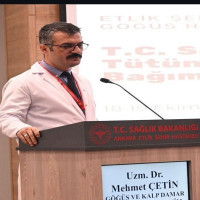
Ankara Üniversitesi Tıp Fakültesi 2013
Ankara Atatürk Göğüs Hastalıkları ve Göğüs Cerrahisi Eğitim ve Araştırma Hastanesi (2015-2021)
Niğde Ömer Halisdemir Üniversitesi Eğitim ve Araştırma Hastanesi (2021-2023)
Ankara Etlik Şehir Hastanesi Göğüs Kalp ve Damar Hastanesi (2023-halen)
Sağlık Bilimleri Üniversitesi Dışkapı SUAM
Editorial Board
Department of Oral and Maxillofacial Surgery, Ankara University Dentistry Faculty, Ankara, Turkey
Dr. Sanjiv Rampal is a distinguished Associate Professor in Orthopedics at International Medical University, renowned for his significant contributions to orthopedic surgery and medical research. With a robust academic background, including a Master of Orthopedic Surgery from the National University of Malaysia and multiple fellowships in hip preservation, musculoskeletal oncology, and arthroplasty from prestigious institutions in Italy, France, and Germany, Dr. Rampal has established himself as a leader in his field.
His research focuses on innovative treatments for musculoskeletal disorders, including the efficacy of intraarticular hip injections for osteoarthritis and the role of hypoxia in bone healing using mesenchymal stem cell therapy. Dr. Rampal has published extensively, with notable works on the distribution of microorganisms in diabetic foot infections and the management of necrotizing fasciitis. His contributions to orthopedic trauma care and joint replacement surgery have been widely recognized, earning him a reputation for excellence in both clinical practice and research.
Dr. Rampal is also an active member of several professional organizations, including the Malaysian Orthopedic Association and the Malaysia Medical Association, reflecting his commitment to advancing orthopedic knowledge and practice. His dedication to improving patient outcomes and advancing medical science continues to inspire his peers and students alike.
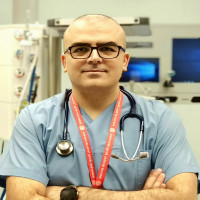
Department of Emergency Medicine, Ankara City Hospital, Ankara, Turkey
Department of General Surgery, Süleyman Demirel University Medical Faculty, Isparta, Turkey
Statistics Editor

Gazi University Medical Faculty, Department of Public Health, Ankara, Turkey


Archives of Current Medical Research (ACMR) provides instant open access to all content, bearing in mind the fact that presenting research
free to the public supports a greater global exchange of knowledge.